



A buyer orders a kitchen gadget from a social media ad. Three weeks later, a plain parcel arrives with no logo, no card, and no reason to remember the store. The sale looks fine, yet it rarely creates a second purchase.
That is the problem many dropshippers face in 2026. The global dropshipping market is expected to pass $500 billion this year, but growth no longer means easy profit. Paid ads cost more. Buyers compare faster. Delivery expectations are higher. The old “test cheap products and move on” method now feels fragile. Sellers need a dropshipping business model that can create recognition, trust, and better margins.
So the real debate is not only white label dropshipping versus private label dropshipping. It is short-term product turnover versus long-term brand value.
Decoding the Models: White Label vs. Private Label in 2026
Before choosing a path, sellers need to see how each model works in real business conditions. Both options can help a store start faster, but they create very different results once competition rises, advertising costs increase, and customers begin judging the full buying experience.
White Label: The High-Volume, Low-Loyalty Trap
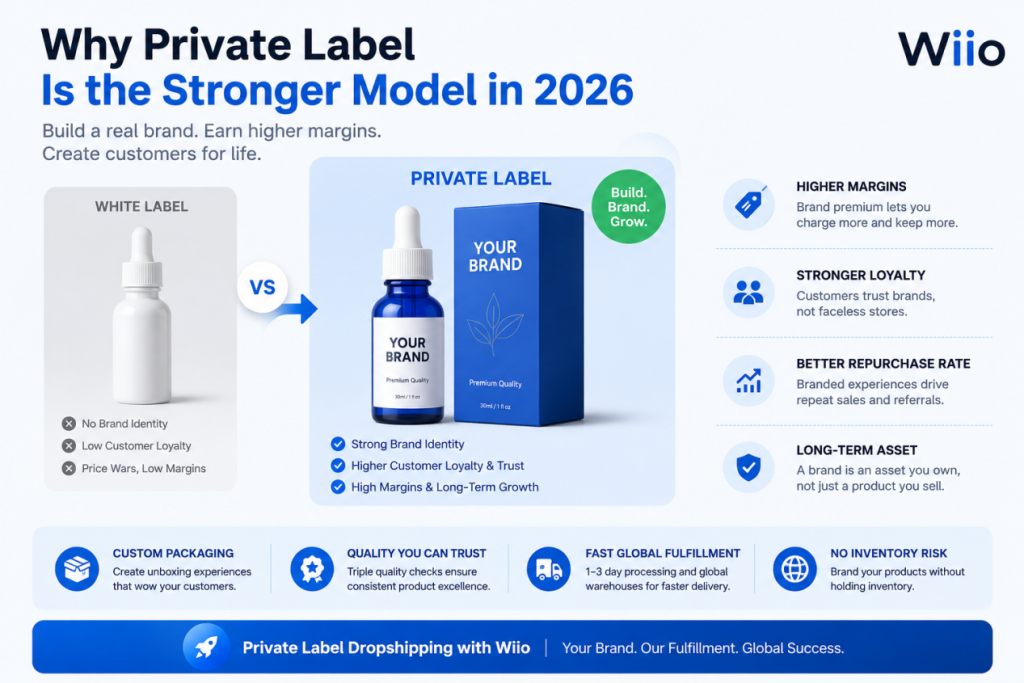
White label dropshipping usually means selling a ready-made product produced by a factory or supplier. The item already exists, is easy to list, and may be sold by many other stores. In some cases, the seller adds a simple logo or light brand layer, but the product itself remains mostly generic. This model has value when speed matters. For beginners, it lowers early pressure and helps collect market feedback.
The weakness appears once many stores sell the same item. Product photos look similar. Prices fall. Ads become the main weapon. The seller can only cut the price, spend more on traffic, or accept a thinner margin.
That is why white label dropshipping often becomes a high-volume, low-loyalty trap. Customers may buy once, but they remember the product, not the store. A plain package gives no brand cue. A generic delivery experience gives no emotional value.
Private Label: Building Long-Term Equity and Profit
Private label dropshipping goes further. The seller builds a more controlled brand layer around the product: logo, branded package, thank-you card, product insert, bundle design, custom photos, or a more carefully selected product range. The goal is not just to ship an item. The goal is to make customers feel they bought from a real brand.
In the past, private label often meant bulk purchasing and heavy inventory. That is changing. With a fulfillment partner that supports sourcing, quality checks, warehousing, and custom packaging dropshipping, sellers can test products first and add brand elements as demand becomes clearer.
This makes private label dropshipping better suited for high margin dropshipping. Branded dropshipping products can support higher prices because the buyer sees more than a basic commodity. A pet care tool, beauty device, compact home item, or wellness gadget becomes more valuable when the store presents it with a clear use case, better packaging, and consistent service.
Why Private Label Is the Stronger Model in 2026
The market is moving away from quick, anonymous transactions. A store that wants better retention needs control over how products look, arrive, and feel after purchase. Private label gives sellers more room to shape that experience without turning every product test into a risky inventory decision.
Own-Brand Customization Without Heavy Inventory
The fear around private label is simple: “What if I buy inventory and the product does not sell?” Many beginners should not start by filling a warehouse with untested stock.
A smarter path is product nurturing. Test demand first. Watch conversion, comments, refund reasons, repeat orders, and shipping performance. Once a product shows promise, add private label layers step by step.
Wiio fits this path because it supports sellers beyond basic order forwarding. Its platform offers product sourcing, a large product catalog, personal sourcing support, global overseas warehouse options, automated order processing, and branding support. Wiio also promotes private label dropshipping, white label products, customer cards, labels, branded bags, custom package inserts, and product photo or video support.
For sellers, this changes the risk profile. Custom packaging dropshipping can start with practical brand elements: a branded mailer, a card, a label, or a simple insert. These details may look small, but they change the customer’s memory of the order. A clean unboxing experience makes the store feel more credible and easier to recognize next time.
Data-Backed Proof: Repeat Purchases Beat One-Time Sales
The strongest case for private label dropshipping is not appearance. It is repeat purchase value.
A plain white label package rarely builds a relationship. A branded experience can. In one Wiio customer case, a store used branded packaging, quality control, and faster local fulfillment over a three-year partnership. The store’s repurchase rate rose from 5% to 15.5%, monthly GMV grew by 700%, conversion improved from 0.8% to 2.2%, and positive reviews increased from 80% to 96%.
These figures show why high margin dropshipping depends on more than product cost. A seller can save $1 on packaging and lose far more through weak reviews, low trust, and one-time buyers. Branded dropshipping products give customers a reason to return, especially in categories where gifting, personal care, hobbies, pets, or lifestyle habits shape the purchase.
Overcoming the Private Label Fulfillment Challenge
Private label only works when the backend can support the promise made on the storefront. The seller needs reliable sourcing, careful checks, flexible packaging, and shipping routes that match buyer expectations. Without those pieces, branding becomes decoration instead of a real business advantage.
Sourcing High-Margin Products Direct from Factories
A private label strategy fails if the product cost is too high. The seller needs enough margin to cover ads, shipping, payment fees, replacements, packaging, and customer service. That is why sourcing matters.
Wiio connects sellers with a wide supplier and factory network, and its materials highlight more than 10,000 premium factory resources. If sellers cannot find the right item in public marketplaces, Wiio’s sourcing function can help search beyond obvious listings. Its product mall also supports image and keyword search.
This matters for high margin dropshipping because the best products are rarely the cheapest items. They usually have high perceived value, clear use cases, low damage risk, and enough room for a branded offer. Sellers can browse Wiio Products or review Wiio Trending Products to find product ideas, then judge whether the item can become a branded product instead of another generic listing.
Strict Quality Control: The Foundation of a Brand
Branding cannot hide poor quality. In fact, private label makes quality even more important because the customer connects every defect with the store’s name.
A professional dropshipping business model needs product checks before shipment. Wiio highlights triple quality checks, including first check, second verification, packaging, classification, and shipping steps. This helps reduce the risk of wrong items, visible defects, packaging mistakes, and avoidable complaints.
For branded dropshipping products, quality control is part of the offer. If a customer receives the correct color, intact packaging, clear tracking, and a product that matches the page, the store earns trust. A single fulfillment partner can coordinate sourcing, checking, packaging, and shipping in one workflow.
Global Logistics and Smoother Customs Operations
In 2026, fulfillment is part of brand reputation. Buyers expect tracking updates, reasonable delivery times, and fewer surprises. A strong product can still fail if delivery feels uncertain.
Wiio promotes global overseas warehouse and fulfillment services, local delivery options in some markets, and fast shipping to key regions. It also supports automated order processing and tracking updates, which helps sellers reduce manual work as orders grow.
This matters for both white label dropshipping and private label dropshipping, but private label sellers feel it more. When customers pay more for branded dropshipping products, the delivery experience must match the promise.
So, Which Model Wins?
The answer depends on whether the seller wants quick testing or a stronger brand asset. White label can still help at the discovery stage, but private label offers more control once a product proves demand. That control becomes more valuable as competition and customer expectations rise.
White label dropshipping still has a role. It is useful for testing products, entering a niche quickly, and learning what customers want. But the stronger 2026 winner is private label dropshipping. It gives sellers more room to build trust, defend prices, improve repeat purchases, and turn ordinary items into branded dropshipping products.
The key is not to rush into heavy inventory. The better move is to test first, then add custom packaging dropshipping, better content, bundles, and quality control around proven products. That is the difference between chasing products and building a brand.
Conclusion
White label dropshipping can create quick cash flow, but it rarely builds lasting customer memory. Private label dropshipping gives sellers a better path toward high margin dropshipping, stronger reviews, and repeat buyers. In 2026, the winning dropshipping business model is not about selling the cheapest item. It is about choosing products with real demand, checking quality, improving the package experience, and delivering reliably. Sellers can explore Wiio Products to find brand-ready items, then contact us at hello@wiio.io for sourcing, custom packaging, fulfillment, and global shipping support.
FAQs
Q: Do I need to buy products in bulk to start a private label with Wiio in 2026?
A: No. Test demand first, then add private label packaging as sales become stable.
Q: How can I ensure the product quality matches my brand’s reputation?
A: Use Wiio’s sourcing support, triple quality checks, and clear product verification before shipment.
Q: How do I find winning products to build my private label brand around?
A: Browse Wiio Products and Trending Products, then choose items with margin, demand, and branding potential.